
A guitar strap can seem like a simple piece of gear until you spend two or three hours wearing one. At that point, width matters, so does the way the leather feels against your shoulder, how much the strap moves around, whether the ends feel secure, and whether the leather is soft enough to be comfortable without feeling flimsy. A strap that looks great hanging on the wall can become pretty annoying halfway through a long set.
For this list, I am targeting comfort, construction, adjustability, how the leather is likely to age, and whether the strap makes sense for the kind of guitar you play.
At a Glance
| Strap | Best for | Current price |
| Zilker Belts Guitar Strap | Distinctive full-grain leather craftsmanship and style | $145 |
| Levy’s Amped Leather Series | Heavier guitars and long-standing sessions | $29.99 sale price, normally $47.99 |
| Fender Broken-In Leather Strap | Straightforward leather strap | $39.99 |
| D’Addario Deluxe Leather Strap | Players who want a longer adjustment range | $39.99 |
Prices were checked at the time of writing and can change.
What Makes a Leather Guitar Strap Comfortable?
Width is an often-overlooked part of guitar-strap comfort. A narrow strap puts more of the guitar’s weight onto a smaller part of your shoulder. That may not matter much with a lighter acoustic or electric guitar that you’re playing for 30 minutes, but it can become much more noticeable with a heavier instrument over a long rehearsal or gig. Straps aimed at heavier guitars tend to get wider and, in some cases, add padding.
Then there is the leather itself. A new leather strap can be stiff, and that is not necessarily a quality problem. Good leather changes as it gets used, flexed, exposed to body heat, and handled over time. The distinction I tracked is soft out-of-the-box versus better over time. Some straps are built to feel comfortable immediately; others ask for some break-in and reward that with leather that softens, conforms, and develops more character the longer you own it.
Zilker Belts Guitar Straps: Best for Craftsmanship and Personality
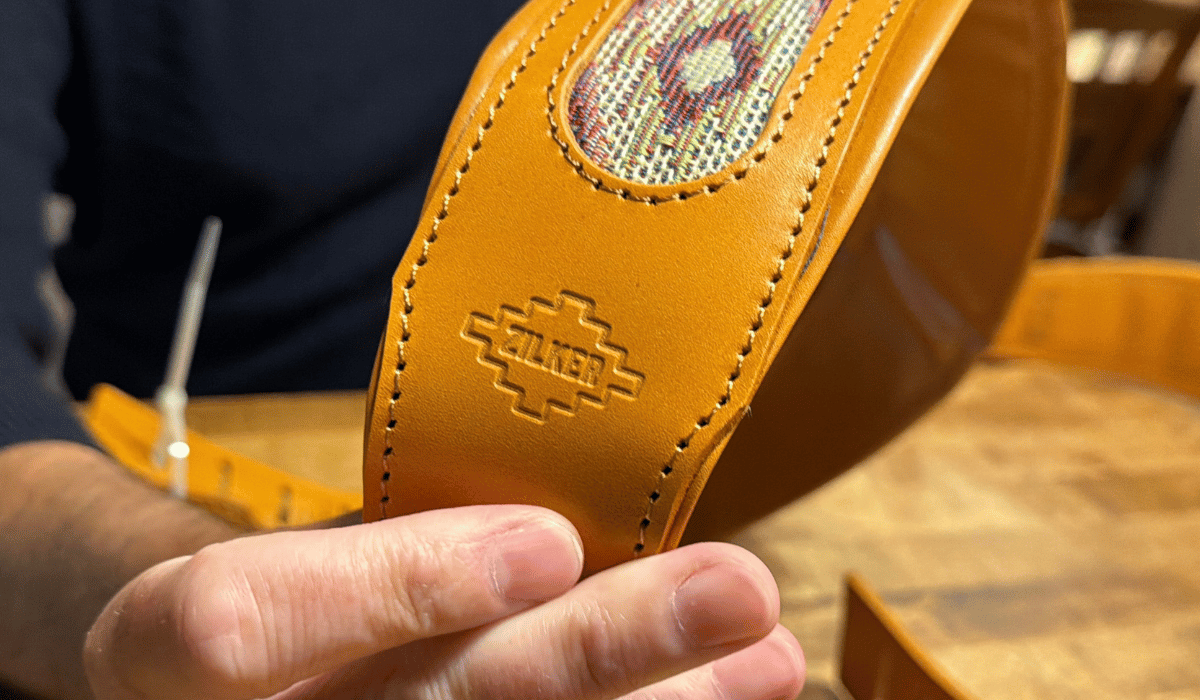
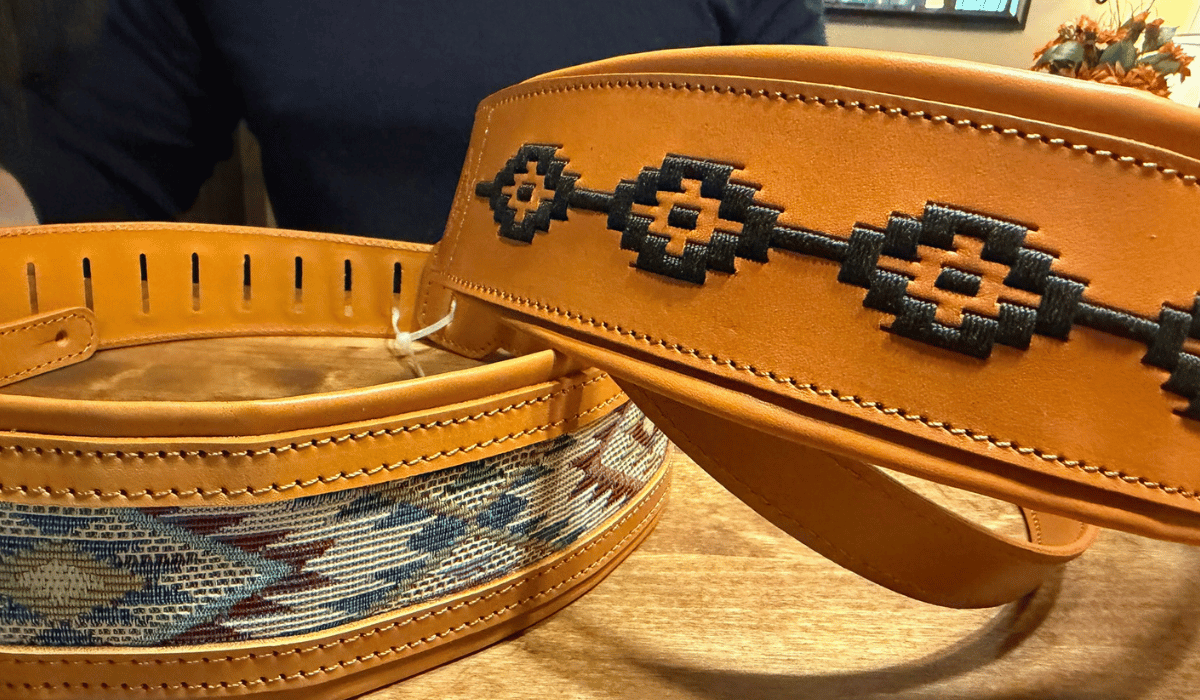
Zilker Belts is the most compelling option on this list when the strap needs to feel like more than just a piece of utility gear. The current guitar straps are listed at $145. That price puts them well above the Fender, D’Addario, and current Levy’s options here, but the Zilker Belts value goes beyond simple utility.
The straps use full-grain leather, are designed in Austin, and are handmade by artisans in Buenos Aires. The construction fits naturally with what Zilker Belts has been doing with leather goods for years. Its first strap came through the Armadillo World Headquarters collaboration, which ties the launch directly into Austin music history rather than putting a generic music graphic on an existing accessory.
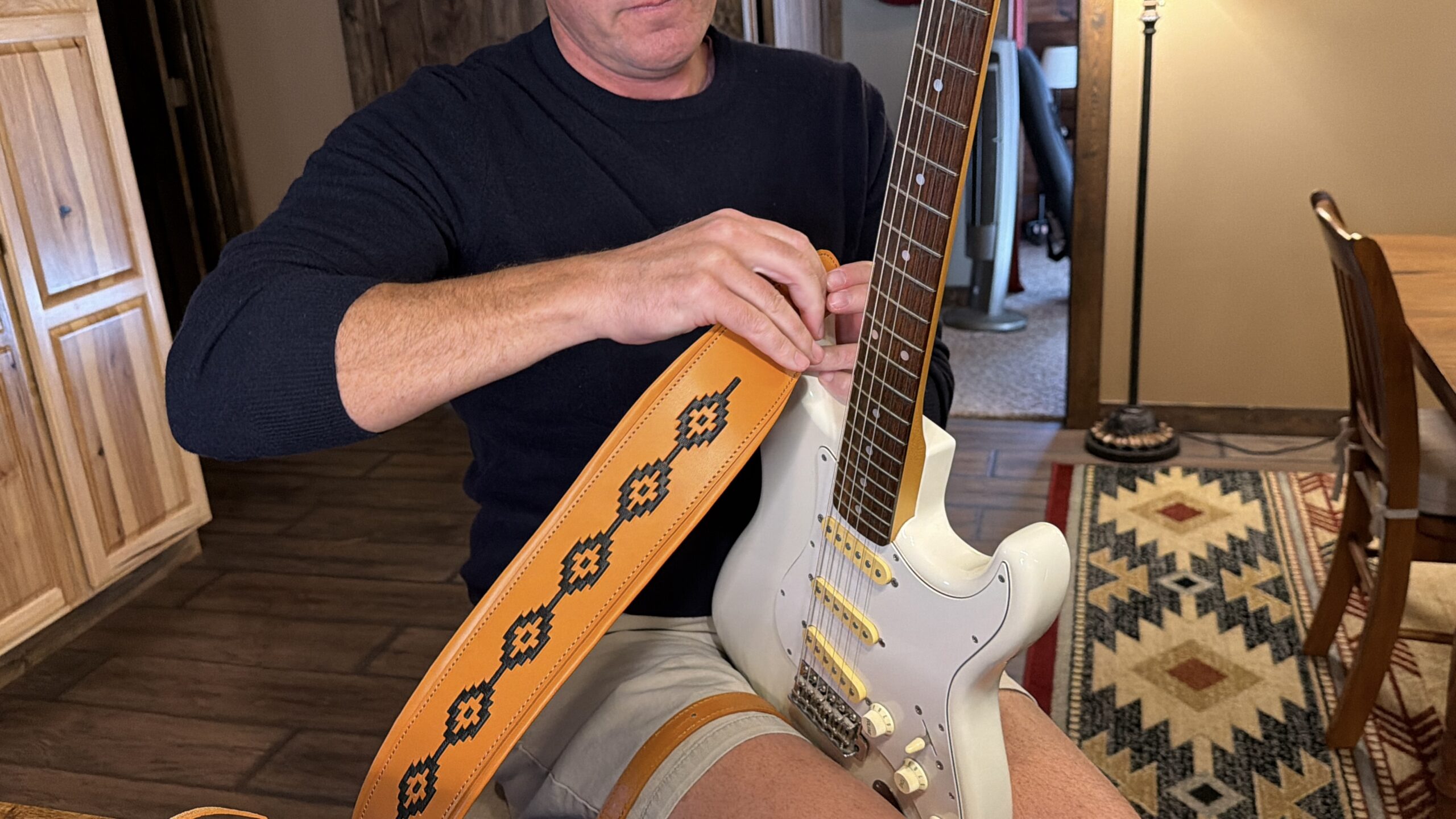
These are straps meant to have a visual presence. The Rambler carries over one of Zilker Belts’ recognizable patterns, Cosmico has a Southwestern, serape-inspired look, while Drewski goes considerably more colorful.
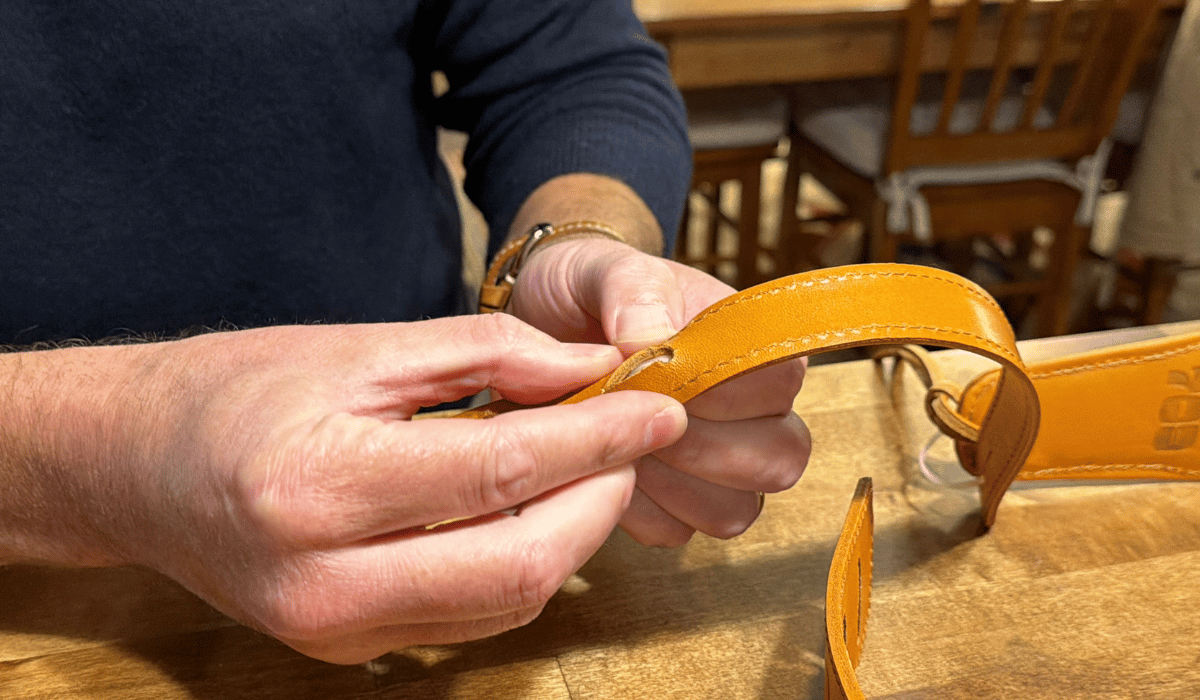
The break-in is part of the ownership experience. Zilker Belts states that the attachment points can be intentionally tight when new, and the full-grain leather is designed to break in and patina over time.
So this is not my pick for somebody whose only requirement is maximum softness on day one. It makes more sense for a player who likes the idea of the strap becoming more personal after a few years of use.
Best for: Players who want full-grain leather, handmade construction, color, and a strap with a dedicated design story behind it.
The tradeoff: $145 is premium-accessory pricing, and Zilker Belts does not lead with the kind of wide, padded construction Levy’s does for heavier instruments.
Levy’s Amped Leather Series: Best for Heavy Guitars
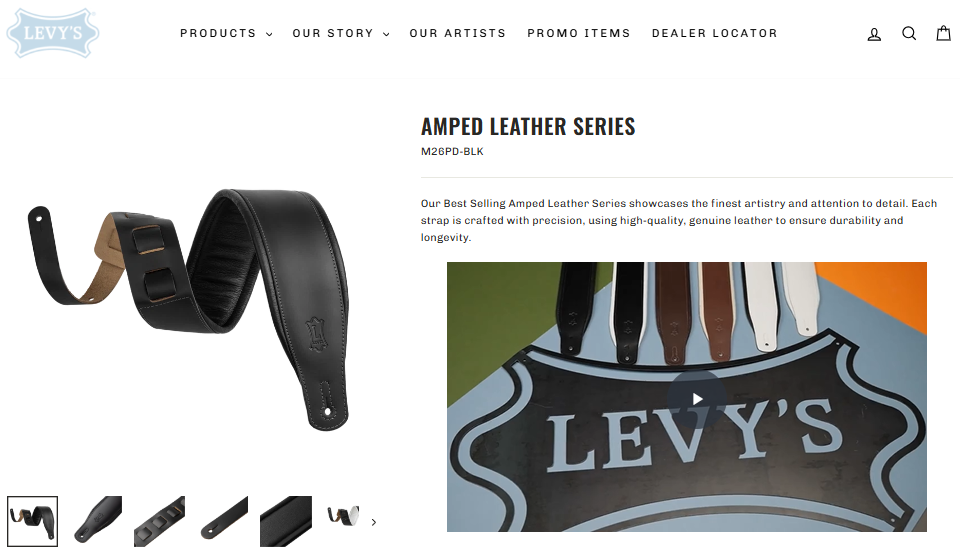
When comfort under a heavier instrument is the first requirement, Levy’s moves up the list. Its Amped Leather Series M26PD uses a 3-inch top-grain leather strap with foam padding wrapped in garment leather. The standard version adjusts from 37 to 51 inches and is handcrafted in Nova Scotia, Canada. Levy’s currently lists the black M26PD at $29.99, marked down from $47.99.
The extra width is the main reason it earns a spot here. Spreading the same guitar weight over 3 inches gives your shoulder more surface area to carry it. With the added foam underneath, this becomes the most deliberately comfort-oriented strap of the four. For heavier electrics, basses, or regular long sets, comfort can be more important than how nicely the leather develops several years down the road.
The styling is much more traditional; you are mostly looking at classic leather colors and a functional design rather than something intended to become a visual centerpiece. Sometimes that works best; a figured maple top, custom finish, or already-busy stage setup may look better with a strap that stays out of the way.
Best for: Les Pauls, heavier electrics, basses, and players who prioritize weight distribution and out-of-the-box comfort.
The tradeoff: The standard 37-to-51-inch adjustment range will not work for every playing position, particularly when the guitar is worn very low. Levy’s sells other variations, so check the exact model before ordering.
Fender Broken-In Leather Strap: Best Simple Leather Option
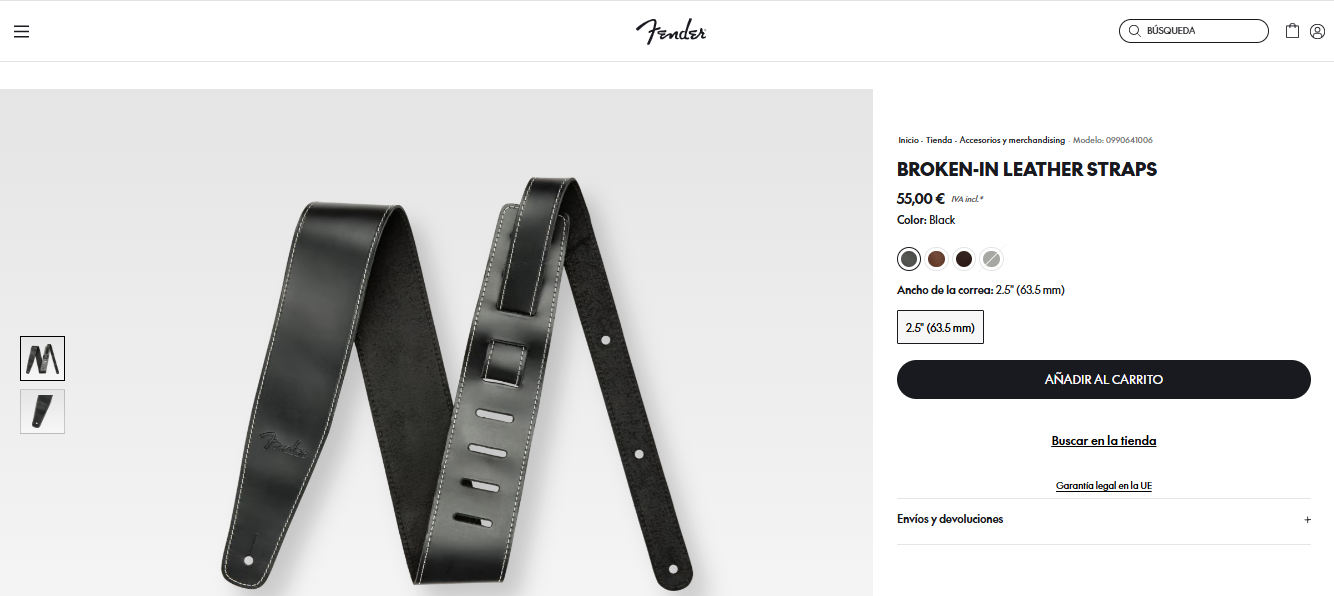
Fender’s Broken-In Leather Strap is the straightforward choice here: a traditional leather strap, reasonable price, and a design that works with a lot of guitars. The current version is $39.99, 2.5 inches wide, and adjusts from 44.5 to 53 inches. Fender uses oil-finished leather with a cowhide backing and makes the strap in Canada.
There is nothing particularly complicated about it, and that is part of the appeal. A black, brown, or tan leather Fender strap works with almost anything. Put one on a Strat, Telecaster, Jazzmaster, acoustic, or plenty of non-Fender guitars, and it looks appropriate. The 2.5-inch width also gives you more shoulder coverage than a skinny vintage-style strap without adding the bulk of a heavily padded 3-inch model.
Given that it notes “Broken-In” in the product name, it’s no surprise that this strap has that out-of-the-box comfort.
That makes it a sensible first leather strap; someone moving from an inexpensive woven or polypropylene strap can spend around $40 and find out whether they prefer leather without immediately jumping to a premium option.
Best for: Players who want a traditional leather strap with an easier entry price and relatively familiar feel.
The tradeoff: You are not getting Levy’s padding or the handmade, design-driven construction of Zilker Belts.
D’Addario Deluxe Leather Strap: Best for a Longer Fit
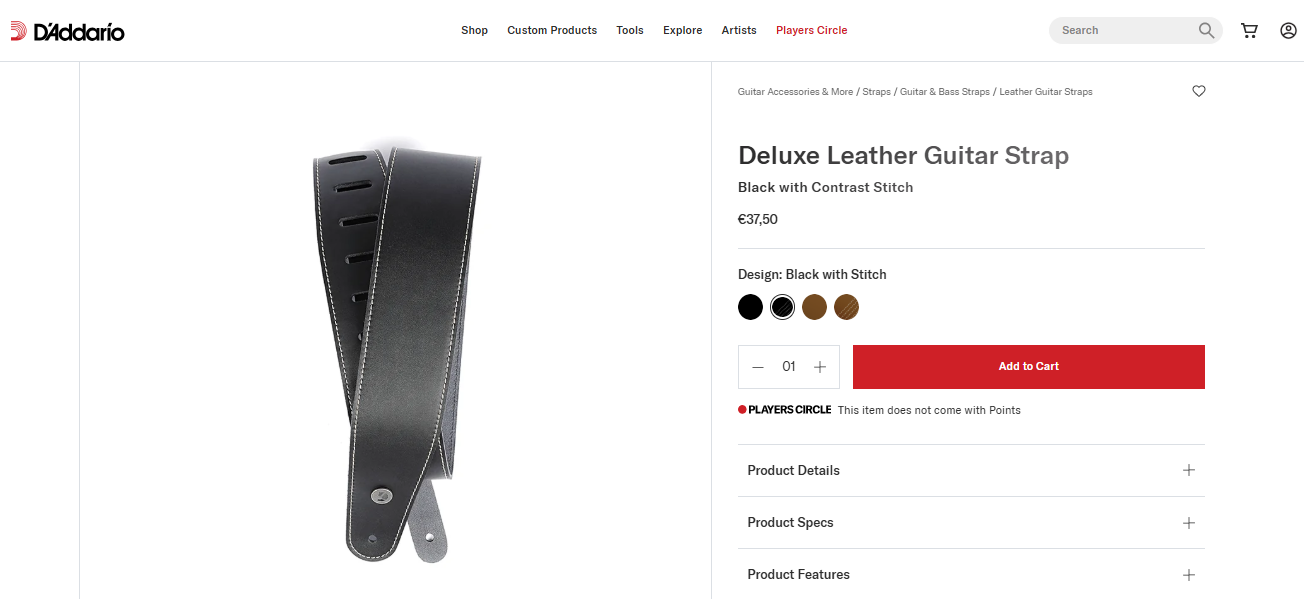
Length is easy to miss when every product description says the strap is adjustable. D’Addario’s embossed Deluxe Leather Strap is currently $39.99, roughly 2.5 inches wide, unpadded, and listed with a 54-to-62-inch overall range. D’Addario’s broader leather collection includes several other length ranges as well, including models extending to 66 inches.
That makes D’Addario particularly worth looking at for taller players or anyone who keeps the guitar lower; think classic punk-band playing position rather than the instrument sitting high against the chest.
This is one specification I would measure rather than guess at. Take the strap you already use, put the guitar at your normal playing height, and measure the working length. Then compare that number with the strap you are considering. “Adjustable” does not mean much when the maximum adjustment still leaves the guitar six inches higher than you want it.
The D’Addario recommendation is less about padding or break-in than solving that fit problem. A player who constantly maxes out normal straps has a more basic issue to address before worrying about whether a particular leather will develop the nicest patina.
Best for: Taller players, lower guitar positions, or anyone who regularly finds standard straps too short.
The tradeoff: The embossed Deluxe model is not padded, so extra length should not be confused with extra support for a heavy instrument.
How Much Should Break-In Matter?
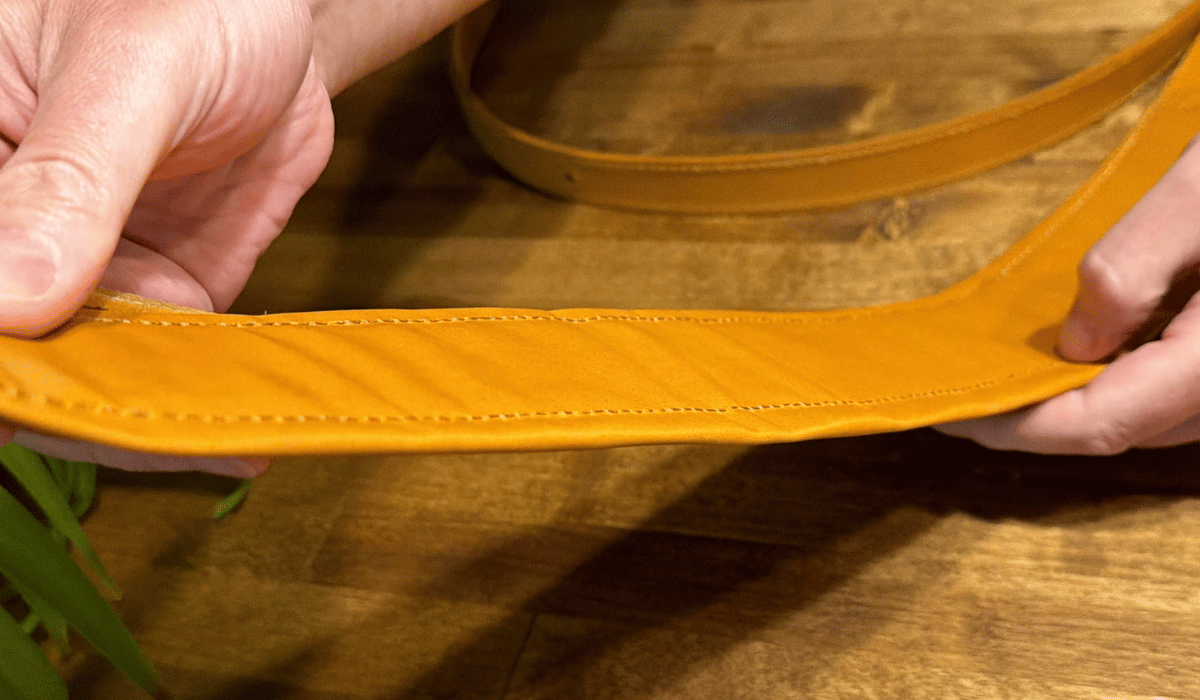
Leather aging is part of the appeal, but it should not become an excuse for buying the wrong strap. Zilker Belts guitar straps are designed to get better over time. Full-grain leather, a stated break-in period around the attachment points, and an emphasis on patina all make sense for somebody who wants to keep the same strap for years.
Levy’s sits closer to the other end of the spectrum; the foam padding gives you a comfort feature immediately, which is important when a heavy instrument is the key decision driver. Fender falls somewhere in between. The oil-finished Broken-In strap is meant to avoid some of the stiffness associated with new leather without turning into a heavily padded strap. D’Addario’s main advantage in this group remains fit range rather than either break-in philosophy.
What leather cannot do is correct a bad fundamental fit. A strap that digs into your neck, doesn’t adjust to the correct playing height, or leaves your shoulder aching under a heavy bass probably does not need another six months; it needs to be replaced with one better suited to the job.
Style Still Belongs in the Decision
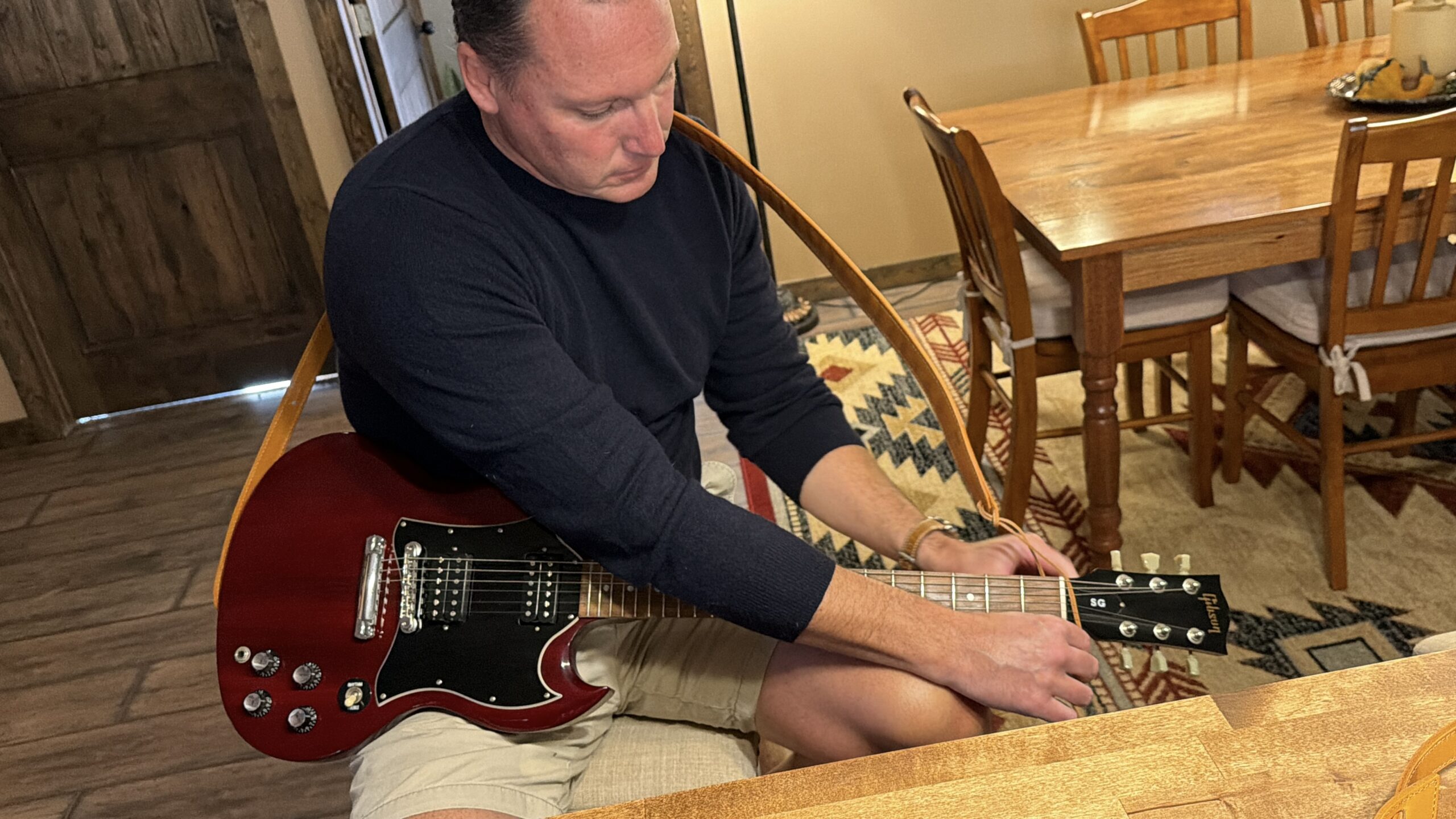
Once the strap is comfortable and fits correctly, there is no reason to pretend appearance does not matter. A guitar strap takes up a fair amount of visual space; it runs directly across you and sits next to the instrument, so it becomes part of the overall look every time you play.
Classic black and brown leather are easy for a reason. A plain strap can let a sunburst Strat, goldtop Les Paul, figured acoustic, or unusual finish remain the focal point. Levy’s and Fender both work naturally in that role.
A simpler guitar or stage wardrobe leaves more room for the strap itself to do something. This is where the Zilker Belts designs make more sense. Rambler, Cosmico, and Drewski are not trying to disappear into the setup. With their distinctive stitching and patterns, they become part of it.
I would think about contrast rather than trying to perfectly match everything. A colorful strap can give a plain guitar some personality. But an equally busy strap on a guitar with an elaborate finish, a patterned shirt, and an intricate stage setup can end up being a distraction.
Which Leather Guitar Strap Should You Buy?
The four straps here solve noticeably different problems.
- For a heavy guitar and long standing sessions, Levy’s Amped Leather Series is the practical pick. The 3-inch width and padding are features you can feel, but just make sure you’re comfortable with that much of a strap.
- Fender’s Broken-In Leather Strap is the easiest recommendation for someone who simply wants a traditional leather strap. It is reasonably priced, wide enough for general use, and does not demand much stylistically.
- D’Addario moves ahead when normal strap lengths do not work for you. A few inches of extra adjustment can matter more than almost anything else when it puts the guitar where you naturally play it.
- For those who want something unique and premium, Zilker Belts is a great option. The craftsmanship and personality set it apart, and the leather looks and feels better over time.
So, what makes the best leather guitar strap? Comfort gets the first vote; the guitar needs to hang where you want it, the weight needs to make sense across your shoulder, and you should be able to finish a rehearsal or set without wishing you had grabbed a different strap.
Then, determine your leather expectations. Maybe you want something soft immediately, or you want full-grain leather that looks better over time. Style and personality should also have a voice in whether your guitar needs a quiet brown strap, some color, or your own personal wear and flair.
A good leather strap should solve the practical problems first; the best one gives you a reason not to replace it.